
Ten years ago, we introduced the Uncanny LearnDash Toolkit to the WordPress.org repository — a small, free collection of modules designed to close the gaps in LearnDash and give course creators a better learner experience out of the box. We had no idea what it would grow into.
A decade later, Toolkit is the #1 LearnDash addon, trusted by more than 20,000 businesses, and it sits at the center of an eLearning plugin suite serving organizations around the world. To celebrate this anniversary, we’re walking back through the most important moments of the last decade — the moments in which you helped shape not just our product line, but the broader eLearning space in WordPress. (Plus, we’ve got a sneak preview of what the next 10 years could look like.)
Grab a coffee. This is going to be a fun trip.
Year 1-2 (2016-2017): Laying the foundation
This is where our story started; with a free plugin, a paid upgrade, and the first WordPress plugin to bring real xAPI and SCORM support to LearnDash.
- A free toolkit arrives for LearnDash — Uncanny Toolkit launches on WordPress.org with a collection of essential enhancements: front-end login, log-in/log-out menu links, course resume, breadcrumbs, conditional content, and more. An immediate and polished upgrade for any LearnDash site, no code required.

- A premium toolkit launches for serious LearnDash sites — Uncanny Toolkit Pro debuts with advanced modules for organizations that need more than what the free edition offered. This was the start of a paid product line built entirely on customer feedback—your feedback.
- The first xAPI Learning Record Store for WordPress — Tin Canny Reporting launches with a native Tin Can (xAPI) LRS, drill-down learner reports, and support for Storyline, Captivate, and H5P content. WordPress gained a real enterprise-grade eLearning reporting platform for the first time.
- Native SCORM support for LearnDash — Tin Canny expands beyond xAPI to handle SCORM content natively. Corporate training teams could finally deliver their existing authoring-tool output inside a WordPress LMS.
- Bulk user import with course enrollment — Import hundreds or thousands of learners from a CSV file and auto-enroll them in courses and groups or import user info to custom user fields. A feature that has been a lifesaver for many organizations that need to manage bulk enrollments.
Year 3-4 (2018-2019): The suite takes shape–and Uncanny Automator is born
With the foundation in place, we expanded into three new product categories — B2B group management, code-based enrollment, and compliance credits — and modernized the whole suite for Gutenberg.
- A B2B management layer for LearnDash groups — Uncanny Groups launches with front-end group management, seat tracking, and group leader reports. This turned LearnDash into a real B2B training platform and opened up selling courses to organizations rather than just individuals.

- Code-based self-enrollment for LearnDash — Uncanny Codes launches with generated redemption codes that enroll users in courses or groups. Delivered voucher programs, bulk sales, reseller distribution, promotional course promo codes and more.
- A dedicated plugin for CE credit tracking — Uncanny Continuing Education Credits launches, with credit assignment per course, compliance reporting, and CE certificates. Built for professional associations and regulated industries with input from our growing user base.
- Subscription-based group licensing — Uncanny Groups introduces recurring group licenses via WooCommerce Subscriptions. Training companies could now sell ongoing team access rather than only one-time purchases.
- Uncanny Automator launches — After nine months of development, Uncanny Automator, the first Automation plugin for WordPress, shipped with 65 triggers and actions across 15 plugins, plus Zapier webhook support.
Year 5-6 (2020-2021): Scale, polish, and Codes expands
By year five, our suite was running on serious production sites. This chapter is about making it faster, more modern, and deeply connected — including one of the most consequential changes we’ve made: tying Codes to Uncanny Automator.
- A modern front-end login experience — Uncanny Toolkit reimagined Frontend Login with reCAPTCHA support, modern styling, AJAX submission, modal support, and a Gutenberg block. Learners get a faster, more polished first touchpoint.
- Sell redemption codes through WooCommerce — Uncanny Codes added a dedicated WooCommerce product type for selling code batches directly to customers – the first plugin to enable the sale of redeemable codes on WordPress.
- Trigger Automator recipes from a code redemption — Uncanny Codes was also extended to connect deeply to Uncanny Automator, so a code redemption can fire any combination of actions across hundreds of integrated apps. Uncanny Codes evolved from a LearnDash enrollment tool into a general-purpose access-granting engine.
- Award CE credits for virtually anything — CEUs added the ability to manually enter CE credits for anything – making it a much more versatile solution. It was also integrated with Uncanny Automator, so credits could be automatically awarded for submitting a form, earning a badge, making a donation, or attending a live event — not just course completion. CE tracking expanded well beyond LearnDash.
- Full xAPI and SCORM dispatch file support — Tin Canny was updated to handle virtually any standards-compliant eLearning module, including dispatch files. LearnDash became a drop-in destination for content produced by any major authoring tool.
Year 7-8 (2022-2023): Certificates, commerce, and compliance
Our suite matured into enterprise territory. This chapter is defined by bulk operations, multi-license purchases, and compliance records that survive real-world course retakes.
- Tin Canny gets Automated — Uncanny Automator gave Tin Canny its own integration with a trigger that fires when a learner hits a specific score on an interactive module (Storyline, Rise, Captivate, iSpring, and more). Module scores could now drive any downstream action — unlocking remedial or advanced content, awarding credits, or firing completions in another platform.
- Automated LearnDash Group Management arrives — Uncanny Groups also got its own Automator integration with triggers for group creation, group key redemption, and seat changes, plus actions to create groups and add or remove seats.
- Preserve CE records across course resets — CEUs was updated to keep historical credit records intact when learners reset or retake courses. A compliance-critical change for associations running annual recertification programs.
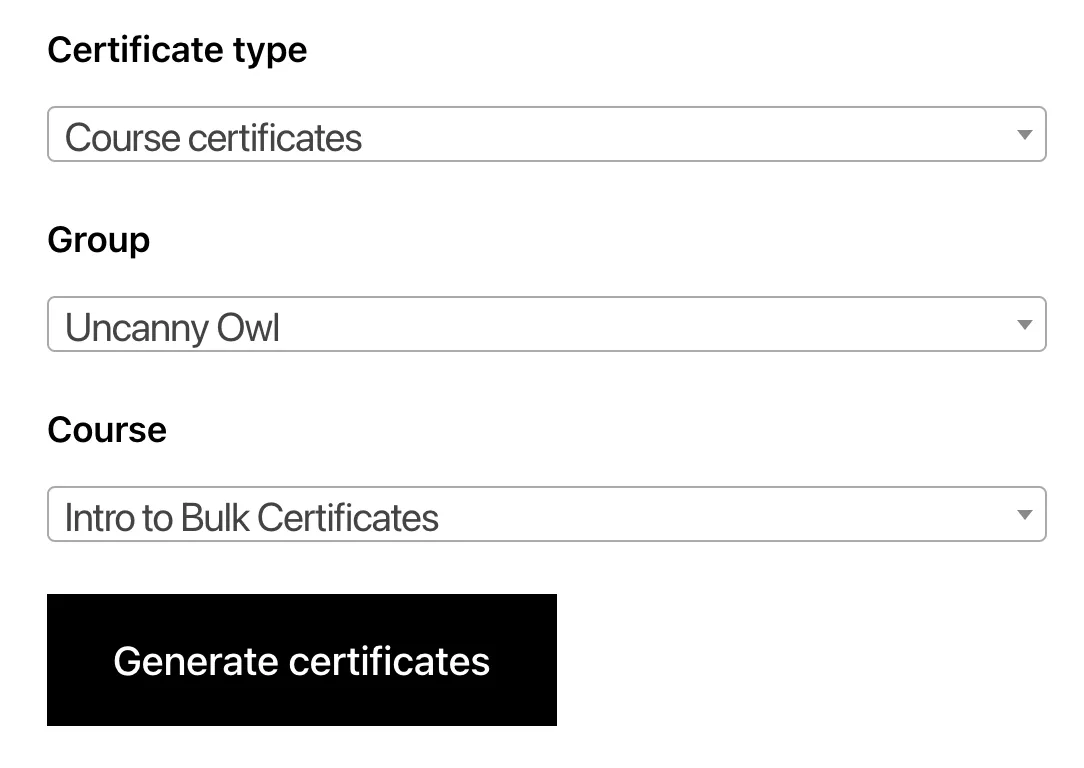
- Bulk certificate downloads — Toolkit Pro now let administrators download ZIPs of PDF certificates for entire groups, courses, or quizzes. Replaced what used to be a multi-hour manual export job with one click.
- Single-page LearnDash courses — A free Toolkit module enabled single-page courses with no lessons or topics. Now a standard layout option used on thousands of sites for microlearning or SCORM/xAPI-powered courses.
- Per-group topic drip scheduling — On top of group-based lesson drip, Toolkit Pro added group-based topic dripping so different cohorts could get access to topics on different calendar dates.
- Front-end learner transcripts for group leaders — Toolkit Pro gave group leaders direct access to printable transcripts for everyone in their group, without handing them WordPress admin access. A key B2B reporting unlock.
Year 9-10 (2024-2026) and beyond: Foundations for the next decade
The most recent chapter is about rebuilding the oldest parts of the suite so they’re ready for the next ten years — new reporting architectures, new admin UIs, and new commercial flexibility.
- A full core rework of Tin Canny’s reporting engine — Tin Canny got a reporting core rebuilt from the ground up with all major libraries updated. The biggest Tin Canny release since native SCORM support arrived, and the foundation for the next generation of reporting features.
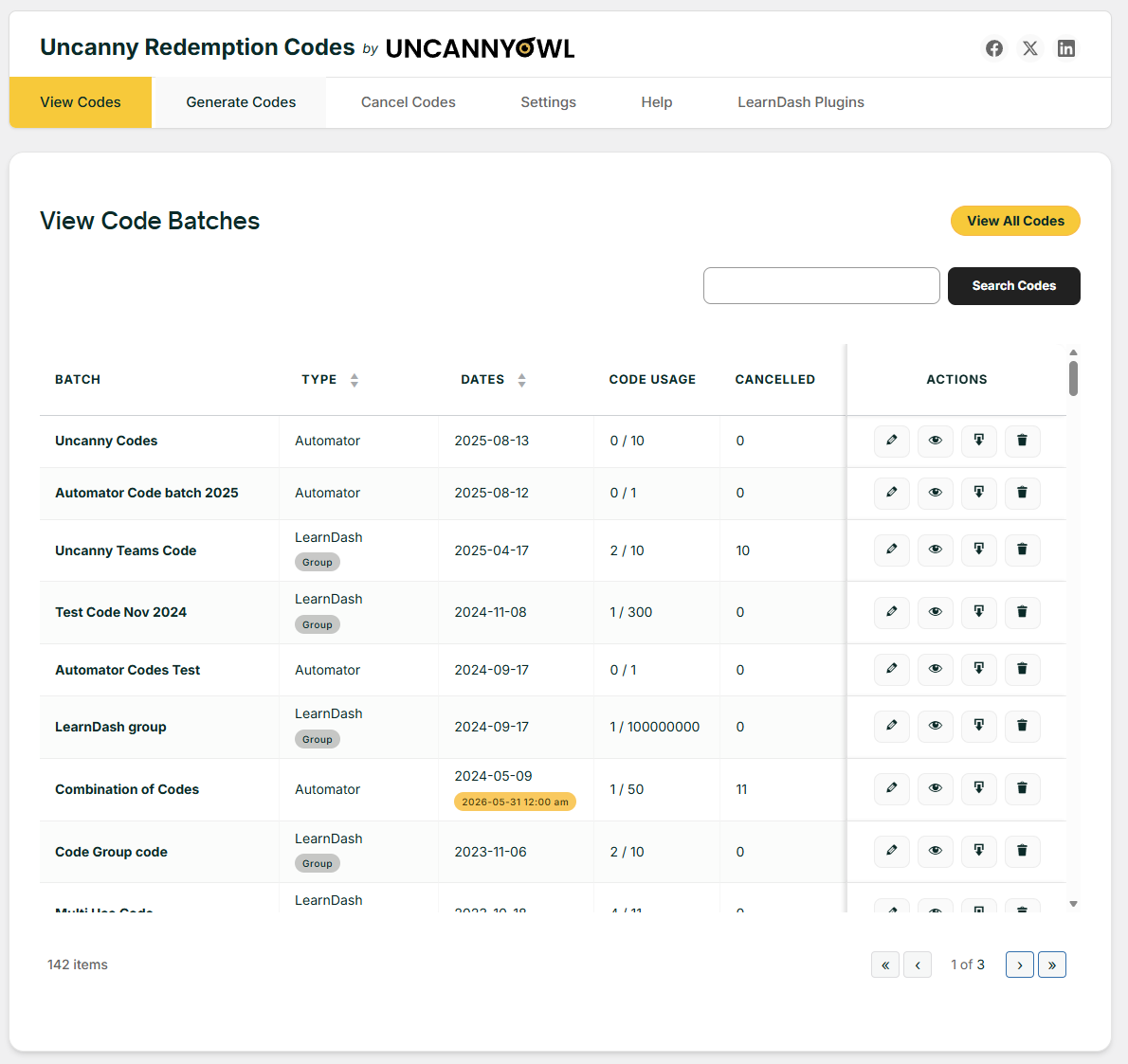
- A new standardized admin UI — Uncanny Redemption Codes debuted a new admin interface design that will roll out across the full Uncanny Owl suite. A consistent, modern user experience across every plugin.
- Shareable public transcript links — Uncanny Toolkit Pro introduced shareable learner transcript URLs, so employers or licensing bodies could easily verify course completion without granting site access.
- Course timer with automatic logout — The Simple Course Timer now logged inactive learners out automatically, protecting accurate time-on-task tracking for compliance training.
Ten years in
Looking back at this list, the thing that stands out isn’t any single release. It’s the pattern: every major feature in Toolkit, Toolkit Pro, Tin Canny, Groups, Codes, and CEUs came from real customer feedback — requests that grew into modules, modules that grew into plugins, plugins that grew into a platform. A lot of what’s now taken for granted in LearnDash started as a feature request from someone running a training business.
To everyone who’s built a course, run a compliance program, launched a training business, or filed a feature request on our site: thank you. Our plugin suite is what it is because of you.
Here’s to the next ten years.
The free Uncanny Toolkit remains available on WordPress.org. For Uncanny Toolkit Pro and the rest of the suite, see the All Access Pass.